













You standardized the formula, but can you guarantee the same product will come out of every facility?
Manufacturing standardization is not just about using the same recipe or using the same material quantities at every facility. It also requires process standardization, operator instructions, and quality requirements to be consistent. This ensures that products meet the same approved standards even when facilities use different equipment, have different capacities, or have different production teams.
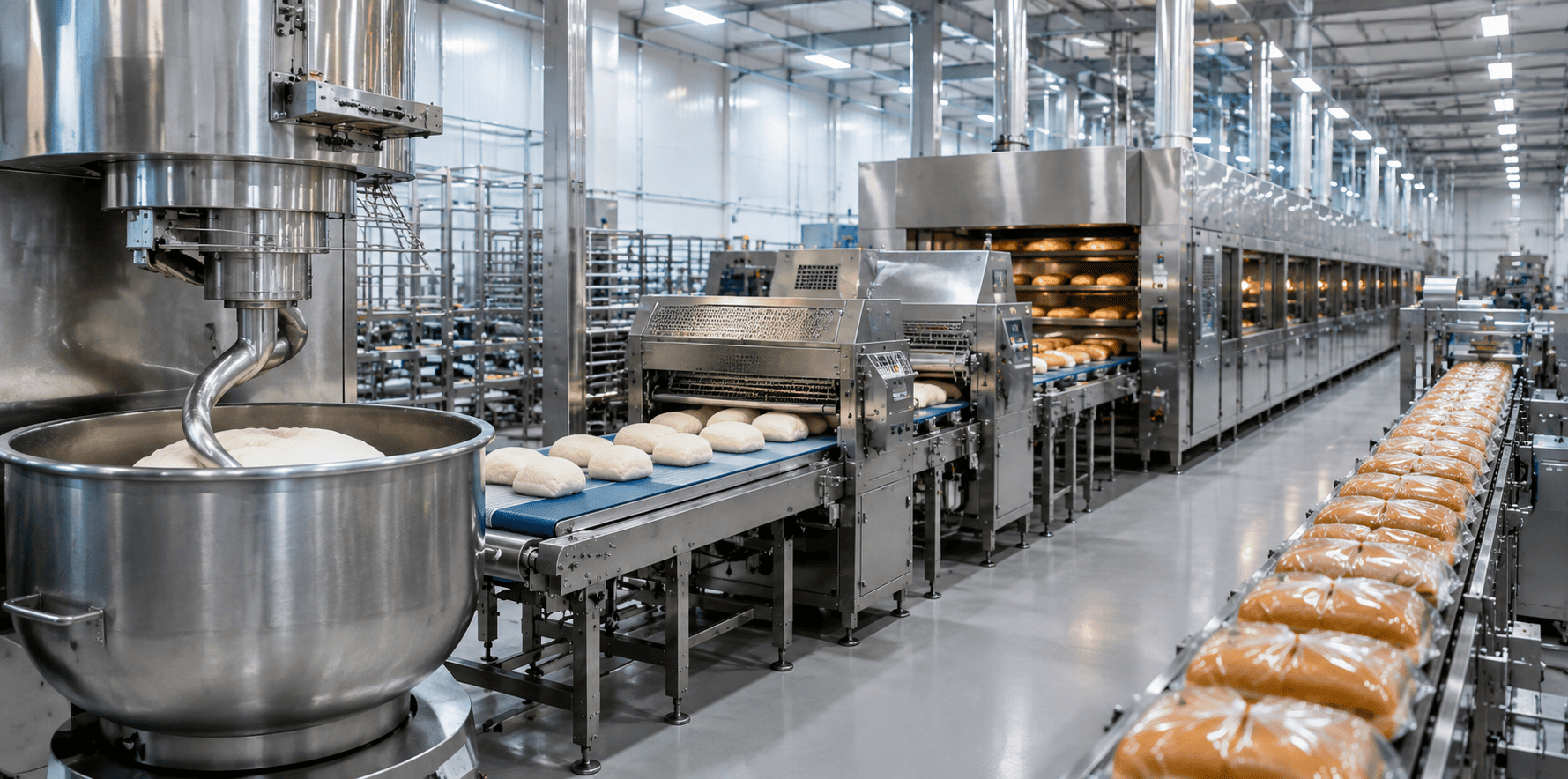
Let’s take the example of a bakery that started with one outlet and expanded to five as demand grew. At the first outlet, the owner could closely monitor the recipe, mixing process, baking conditions, and final product quality. But as production expanded, each location began operating with different equipment, operators, and production practices. Although all five outlets were using the same recipe, customers began to notice differences in texture, appearance, and taste.
So, how can a business maintain the same product quality as it expands? This is exactly what we’ll cover in this blog. We’ll explore:
- Why Production Becomes Difficult to Standardize Across Facilities
- What Manufacturers Should Standardize Across Facilities
- How to Standardize Formulas and Recipes
- How Process Standardization Improves Production Consistency
- How Standard Operating Procedures Support Consistent Production
- How an Integrated PMS and QMS Approach Supports Multi-Facility Standardization
Why Production Becomes Difficult to Standardize Across Facilities
Expanding production across multiple facilities increases capacity, but it can also introduce variations in the way products are manufactured. A product may have the same approved formula, but the actual production process can differ from one location to another.
For example, one bakery may:
- Use a different mixer or oven.
- Follow a slightly different mixing sequence.
- Allow operators to interpret production instructions differently.
- Use different equipment settings.
- Perform quality checks at different stages.
- Maintain production instructions separately at each facility.
These differences may seem minor individually, but together they can affect the final product.
The same problem can occur in process manufacturing environments such as food, beverage, dairy, pharmaceutical, chemical, and personal care manufacturing. When every facility develops its own way of producing the same item, manufacturers can experience differences in manufacturing quality consistency, increased rework, production deviations, and difficulty identifying the source of quality problems.
The challenge is therefore not simply producing the same product in multiple locations. It is ensuring that every facility follows the same approved manufacturing standards.
What Should Manufacturers Standardize Across Facilities?
Manufacturing standardization does not mean every facility needs to operate in exactly the same way. Instead, manufacturers should identify the elements that directly affect product quality, production consistency, and compliance and standardize those elements.
| Area | What Should Be Standardized? |
|---|---|
| Formula / Recipe | Ingredients, quantities, percentages, tolerances, consumables, and expected output |
| Operator Instructions | Standard production procedures, material handling, mixing, preparation steps, and other critical production guidance |
| Quality | Tests, acceptance criteria, sampling requirements, and inspection points |
| Revisions | Approved changes to formulas, processes, and quality requirements |
| Production Data | Units of measure, material definitions, and other supporting master data |
Each area addresses a different part of the production process.
- A standardized formula defines what should be used.
- Process standardization defines how it should be produced.
- Standard operating procedures define how operators should perform critical activities.
- Quality controls define how the finished or in-process product should be verified.
Together, these form the foundation of effective manufacturing standardization.
How to Standardize Formulas and Recipes
For a bakery, recipe consistency becomes particularly important as production expands.
Consider a recipe containing flour, water, sugar, butter, salt, and yeast. If the recipe is defined differently at different facilities, the resulting product can vary from one location to another. This is where bakery-specific production functionality can help standardize recipes.
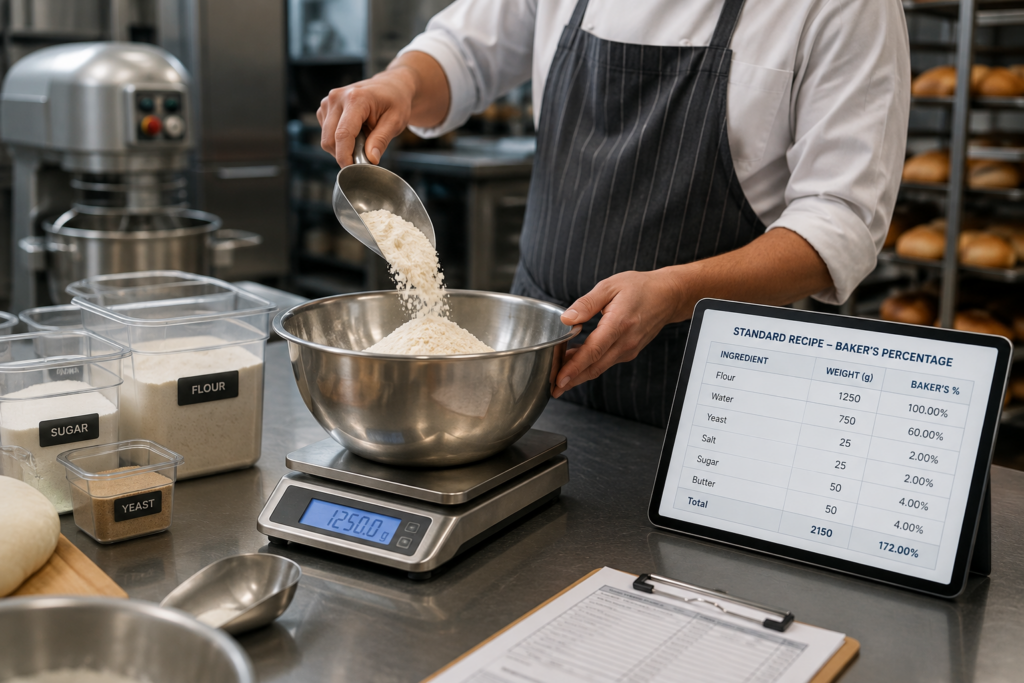
A bakery can define a formula using Baker’s Percentage, where flour is treated as the key ingredient at 100% and other ingredients are calculated relative to the flour weight.
| Ingredient | Baker’s % |
|---|---|
| Flour | 100 |
| Water | 60 |
| Sugar | 8 |
| Butter | 5 |
| Salt | 2 |
| Yeast | 1 |
If the required flour weight changes, the corresponding ingredient quantities can be calculated automatically based on these percentages. This becomes particularly useful when the same recipe needs to be produced at different quantities or across multiple production locations.
With eWorkplace Apps’ Bakery Vertical, manufacturers can define bakery formulas using Baker’s Percentage, identify the flour or key ingredient, automatically calculate ingredient quantities, and scale recipes according to production requirements.
This helps reduce dependency on manual calculations and provides a consistent recipe foundation for production.
But just because every facility uses the same formula, it doesn’t mean they will produce the same result.
So how do you make sure that all facilities manufacture the product in the same way? This is where Process Standardization becomes important.
How Process Standardization Improves Production Consistency
Two facilities can use the exact same formula and still produce different results if the production process differs.
For example, a bakery may use the same dough formula at two facilities, but one location may perform mixing before a particular preparation step while another follows a different sequence. Operators may also use different work centers or production resources. This is where process standardization becomes important.
A Master Routing can define the best possible sequence of operations required to manufacture a product. It acts as a reusable production blueprint that can be associated with multiple formulas or production orders.
A typical process might include:
Weighing 🡪 Mixing 🡪 Heating 🡪 Processing 🡪 Packaging
The routing can define information such as:
- Operation sequence
- Work centers
- Resources and equipment
- Standard times
- Production steps
eWorkplace Apps’ PMS offers the Master Routing feature that helps manufacturers set a common production process that can be reused across manufacturing activities.
This ensures that facilities are not independently deciding how the same product should move through production. Instead, they can work from an approved manufacturing process. That is an important part of manufacturing standardization because standardizing the formula without standardizing the production process leaves room for variation.
This ensures that facilities are not independently deciding how the same product should move through production. Instead, they can work from an approved manufacturing process. That is an important part of manufacturing standardization because standardizing the formula without standardizing the production process leaves room for variation.
How Standard Operating Procedures Support Consistent Production
Even with a standardized formula and routing, operators still need clear instructions for performing specific activities. This is particularly important when production involves tasks that depend on operator judgment or require specific handling methods.
For example, a production instruction may specify:
- How a material should be handled.
- How equipment should be prepared.
- What sequence an activity should follow.
- What precautions an operator should take.
- What conditions must be maintained during a process.
Without standardized instructions, operators at different facilities may interpret the same production step differently.
Standard operating procedures inmanufacturing help reduce this variation by providing documented and repeatable instructions for critical activities.
In PMS, Boilerplate Instructions can be created once and reused where required. Instead of maintaining completely different instructions at each facility, manufacturers can establish standardized production instructions that support consistent execution.
This creates another layer of manufacturing standardization:
Formula 🡪 Process 🡪 Operator Instructions
But production consistency is not complete until manufacturers also standardize how quality checks of the product are done. This is where eWorkplace Apps’ Process Manufacturing Suite (PMS) and Quality Management Suite (QMS) can play a major role in the manufacturing lifecycle. While PMS helps standardize what is produced and how it is produced, QMS helps ensure that the finished or in-process product is evaluated against the same approved quality requirements across facilities.
With QMS, manufacturers can define common QC Plans, tests, result criteria, and sampling requirements and apply them to the relevant production processes. This allows different facilities to follow the same quality checks even when their equipment, capacity, or operators differ.
How an Integrated PMS and QMS Approach Supports Multi-Facility Standardization
Manufacturing standardization becomes more effective when production and quality requirements are managed as connected processes rather than separate activities.
The PMS can provide the foundation for standardizing how products are defined and manufactured, while the QMS can help standardize how production quality is verified.
Together, the two systems can support a connected standardization framework:
- Standardize What to Manufacture – Formula
Define the ingredients, quantities, percentages, and production requirements that form the approved product specification. - Standardize How to Manufacture It – Master Routing
Define the sequence of operations, work centers, resources, and production steps used to manufacture the product. - Standardize How Operators Perform the Work – Boilerplate Instructions
Provide reusable production instructions for activities that need to be performed consistently. - Standardize How Quality Is Verified – QC Plans and Sampling Plans
Define the tests, acceptance criteria, sampling requirements, and inspection controls that facilities should follow.
This creates a connected approach to manufacturing standardization rather than relying on separate spreadsheets, documents, or facility-specific procedures.
Conclusion
Manufacturing standardization is not about making every facility operate in exactly the same way. It is about ensuring that every facility follows the same approved formula, production process, operator instructions, and quality requirements.
By using PMS and QMS, manufacturers can standardize how products are produced and how quality is verified, while still allowing each facility to work within its own equipment, capacity, and operational environment.
Contact us to learn how eWorkplace Apps’ PMS and QMS can help you standardize production and quality across multiple facilities.
FAQs
-
What is manufacturing standardization?
Manufacturing standardization is the practice of establishing consistent formulas, production processes, operating instructions, and quality requirements across manufacturing operations. It helps ensure that the same product is manufactured to the same approved standards across facilities.
-
How does process standardization improve manufacturing consistency?
Process standardization defines the approved sequence of production operations, resources, work centers, and critical processing steps. This reduces variations in how operators and facilities manufacture the same product.
-
What are standard operating procedures in manufacturing?
Standard operating procedures in manufacturing are documented instructions that define how specific production activities should be performed consistently. They can cover material handling, equipment operation, production steps, inspection activities, and other critical processes.
-
How can manufacturers standardize production across multiple facilities?
Manufacturers can standardize production by establishing common formulas/recipes, master routings, operator instructions, and quality requirements. Facilities can still maintain differences in equipment, capacity, and local operations while following the same approved production standards.
-
Does manufacturing standardization require every facility to use the same equipment?
No. Manufacturing standardization does not require identical equipment or facility layouts. Manufacturers can standardize the product formula, approved production process, instructions, and quality requirements while allowing facilities to accommodate local equipment and capacity differences.
Contact Us